This Is Why Everyone’s Obsessed With Dubrovnik’s Hidden Public Gems
You know that feeling when you stumble upon a place so beautiful, you can’t help but snap a photo? Dubrovnik isn’t just about Game of Thrones fame — its real magic lies in the quiet squares, sunlit stairways, and coastal pathways locals love. I walked every cobblestone, chased golden-hour light, and found public spaces so Instagram-worthy, they made my feed go wild. Let me show you the Dubrovnik beyond the postcards — authentic, vibrant, and absolutely unmissable.
The Heartbeat of the Old Town: Stradun as a Social Stage
Dubrovnik’s Stradun is more than a thoroughfare — it’s the city’s living room. This broad, limestone-paved street cuts through the heart of the Old Town like a polished ribbon, its smooth surface reflecting sunlight in a way that photographers dream of. By day, it hums with rhythm: the click of sandals, the chime of church bells, the occasional burst of street music drifting from a corner archway. Locals stroll with iced coffee in hand; families pause beside marble fountains; artisans display handmade jewelry on pop-up stands. The energy is steady, never frantic, offering a rare blend of historic grandeur and everyday life.
What makes Stradun so captivating is how seamlessly it integrates the past with the present. Originally rebuilt after a devastating earthquake in the 18th century, its uniform Baroque architecture creates a harmonious visual flow — ideal for wide-angle shots and cinematic storytelling. Yet it’s far from a museum piece. It’s where residents meet for morning walks, where children chase pigeons, and where seasonal festivals transform the street into a stage for folk dances and open-air markets. For visitors, capturing this balance — between monument and moment — results in images that feel alive, not staged.
Photographers and content creators will find the best light in the early morning, just after sunrise, when the long shadows stretch diagonally across the stone, adding depth and texture. The golden hour before sunset is equally rewarding, with warm tones washing over the cream-colored buildings. To avoid crowds, aim to arrive before 8 a.m. or later in the evening when cruise ship visitors have returned to port. During these quieter windows, the street feels intimate, almost private — a rare gift in one of Europe’s most photographed cities.
Fortresses That Double as Photo Studios: Lovrijenac and Bokar
Rising like ancient sentinels above the Adriatic, Dubrovnik’s fortresses are more than relics of defense — they are open-air photography studios with million-dollar views. Lovrijenac Fortress, often called “Dubrovnik’s Gibraltar,” perches on a 37-meter rock just outside the western walls. The climb is steep but rewarding, each step revealing new vantage points of the sea and skyline. Once at the top, the 360-degree panorama unfolds: terracotta rooftops cascade toward the harbor, sailboats dot the turquoise water, and the horizon blurs into a soft line of blue. It’s no wonder influencers and travel photographers return here again and again.
Bokar Fortress, slightly less visited but equally stunning, offers a more intimate experience. Connected to the city walls, it provides a strategic view of the Pile Gate entrance and the surrounding coastline. Its arched walkways and cannon-lined bastions create strong geometric lines, perfect for framing portraits or architectural shots. Unlike Lovrijenac, which can draw crowds during peak season, Bokar remains relatively peaceful, allowing for longer, uninterrupted moments with the view. Both fortresses exemplify how Dubrovnik’s military history has been repurposed into public spaces that celebrate beauty as much as defense.
Accessibility varies slightly between the two. Lovrijenac requires a separate ticket or a city walls pass, and the climb involves over 150 steps, so comfortable footwear is essential. Bokar is included in the standard city walls admission and is reached via a gentle slope from the western ramparts. For those with mobility concerns, the view from the lower sections of the walls still offers impressive perspectives. The best time to visit either fortress is late afternoon, when the sun casts long shadows over the stone and the light turns honey-gold. Sunset here is not just a visual spectacle — it’s a communal experience, as visitors gather in quiet reverence, phones and cameras raised in unison.
Parks with a View: The Charm of Gradac Park
Amid the sea of limestone and terracotta, Gradac Park offers a refreshing contrast — a lush, green sanctuary where locals unwind and nature takes center stage. Located just steps from the eastern edge of the Old Town, this coastal park stretches along a rocky promenade, its winding paths shaded by centuries-old Aleppo pines and Mediterranean shrubs. Benches face the water, inviting quiet contemplation or a peaceful afternoon read. In the evenings, the space transforms: families gather for picnics, couples stroll hand-in-hand, and open-air concerts fill the air with classical melodies or folk tunes.
For content creators, Gradac Park provides a softer, more organic backdrop compared to the structured symmetry of the Old Town. The dappled light filtering through the trees creates natural bokeh, while the contrast between greenery and sea offers rich color palettes for photography. It’s an ideal location for lifestyle content — a woman in a linen dress reading under a tree, children chasing bubbles near the fountain, or a couple sharing gelato on a bench. These moments feel authentic because they are: this is where Dubrovnik breathes, away from the tourist bustle.
The park also plays a vital role in the city’s cultural calendar. During summer, it hosts the Dubrovnik Summer Festival, featuring theater performances, music recitals, and dance shows beneath the open sky. Even outside festival season, the atmosphere remains vibrant. Street vendors sell cold drinks and handmade crafts, while local artists set up easels to paint the seaside view. For visitors, spending time here offers more than just beautiful photos — it’s a chance to witness the rhythm of local life. To capture the park at its most serene, visit in the early morning when dew still clings to the grass and the only sounds are birdsong and distant waves.
Hidden Staircases and Alleyways: Urban Secrets Waiting to Be Framed
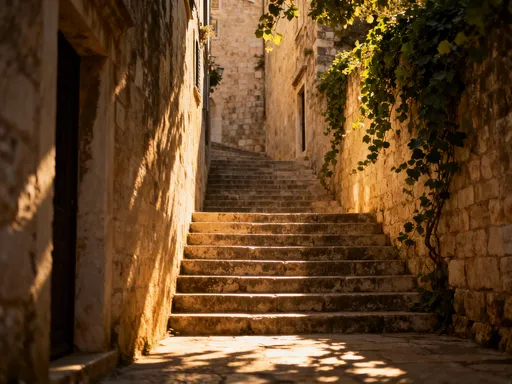
While the main streets of Dubrovnik dazzle, its true character hides in the narrow staircases and tucked-away alleys that snake between buildings. These forgotten passages — some no wider than a shoulder span — are lined with weathered stone, climbing ivy, and the occasional potted geranium. The Jesuit Stairs, winding up from the Ploče district, are a favorite among photographers for their symmetry and soft curves. Each step is worn smooth by centuries of footsteps, telling a silent story of daily life. At certain angles, the stairs seem to disappear into the sky, framed by overhanging rooftops and fluttering laundry.
Other hidden routes, like the side paths near Pile Gate or the alley behind St. Blaise Church, offer equally compelling compositions. These spaces thrive on texture: peeling paint, rusted iron railings, shadows that shift with the sun. They invite slow exploration, rewarding those who pause to notice details. A single shaft of light piercing a dark corner, a cat curled on a windowsill, or a shutter slightly ajar revealing a glimpse of a courtyard — these are the moments that make for evocative storytelling.
Navigating these areas discreetly is key to capturing uninterrupted shots. Avoid midday, when tour groups funnel through the main arteries. Instead, explore in the early morning or just before dusk, when the light is low and the city quiets. Wear non-slip shoes, as the stone can be slippery, especially after rain. Be respectful of residents — many of these alleys lead to private homes. Keep noise to a minimum and avoid blocking entrances. By moving thoughtfully, visitors not only preserve the authenticity of these spaces but also honor the community that lives within them. These staircases are not just photo opportunities — they are living threads in Dubrovnik’s urban fabric.
Waterfront Walks: From Ploče to Buža Bar’s Cliffside Hangouts
The eastern edge of Dubrovnik’s Old Town reveals one of its most magical features: the seaside promenade that stretches from Ploče Gate to the famous Buža Bars. This public pathway clings to the cliffs, offering uninterrupted views of the Adriatic. By day, the water sparkles in shades of sapphire and emerald; by dusk, it turns molten gold, reflecting the sky like a mirror. The promenade is a favorite among locals and visitors alike, perfect for a sunset walk or a quiet moment with the sea.
But the real surprise lies beyond the official path — the Buža Bars, a series of informal terraces carved directly into the rock face. Accessed through unmarked doorways in the city walls, these cliffside hangouts are as raw as they are beautiful. Stone steps descend into natural alcoves where low tables and cushioned seats invite lingering. Visitors sip wine, share small plates, and watch the waves crash below. There’s no grand design here — just ingenuity and a deep connection to the sea. For photographers, the contrast between the rugged rock and the soft glow of lanterns creates a dramatic, intimate atmosphere.
Because these spaces are not officially managed, they retain a sense of spontaneity. There are no signs, no reservations, no dress code — just a shared understanding that this is a place to relax, not perform. Arrive early in the evening to secure a good seat, as space is limited. The bars operate seasonally, typically from late spring to early autumn, and accept cash only. While the views are undeniably stunning, the true charm lies in the unscripted moments: a couple toasting with local wine, a grandmother knitting in the corner, a group of friends laughing as they lean over the edge to watch the surf. These are the scenes that remind us travel is not just about seeing, but about feeling.
Squares That Tell Stories: St. Blaise and Sponza in Slow Motion
While Stradun draws the crowds, Dubrovnik’s smaller squares offer a different kind of magic — one defined by stillness and detail. St. Blaise Square, nestled beside the baroque church dedicated to the city’s patron saint, is a study in quiet elegance. Its cobblestones are worn smooth, its fountain trickles softly, and the pale stone façade of the church glows in the afternoon light. There are no vendors, no loud music, no rush. Instead, there’s a sense of reverence — for history, for beauty, for the passage of time.
Sponza Square, adjacent to the 16th-century Sponza Palace, shares a similar calm. Once a customs house and mint, the building now houses the city archives and a war memorial. The square in front is often empty, save for a lone musician or a couple pausing for a photo. The architecture here reflects Dubrovnik’s Venetian heritage — arched windows, intricate stonework, a clock tower that still keeps perfect time. These spaces are ideal for slow photography: capturing the play of light on stone, the flutter of a flag in the breeze, or the shadow of a bell tower stretching across the pavement.
What makes these squares so powerful is their ability to slow us down. In an age of constant movement, they invite stillness. A single frame taken here can convey more emotion than a dozen fast-paced shots. For creators, they offer a chance to focus on composition, texture, and mood. Visit in the late afternoon when the sun skims the horizon, casting long, dramatic shadows. Or come at dawn, when the city is just waking and the squares are bathed in soft, diffused light. These moments are fleeting — but they are also timeless.
Responsible Sharing: Keeping Dubrovnik’s Spaces Alive
As Dubrovnik’s public spaces gain popularity online, the responsibility to protect them grows. The rise of social media has brought well-deserved attention to the city’s beauty, but it has also led to overcrowding, wear on historic surfaces, and disruptions to local life. Some visitors climb restricted walls for the perfect shot, while others block narrow alleys for extended photo sessions. These actions, though often well-intentioned, can erode the very charm they seek to capture.
The solution lies in mindful exploration. Choose to visit popular sites early in the day, when foot traffic is lighter and the atmosphere is more peaceful. Respect signage and barriers — they exist to preserve both the structures and the safety of visitors. Avoid posting geotags that encourage trespassing or risky behavior. Instead, focus on sharing the beauty of accessible, public areas in a way that honors their purpose.
Equally important is awareness of local customs. Dubrovnik is not a set — it’s a living city. When photographing people, ask permission when possible. Be mindful of noise in residential areas, especially in the evenings. Support local businesses by purchasing from neighborhood cafes and artisans rather than relying solely on chain stores. By traveling with intention, visitors contribute to the sustainability of the places they love.
Photography should enhance appreciation, not exploit it. A beautiful image can inspire others to visit — but it should also inspire them to care. When we share Dubrovnik’s hidden gems, we carry a quiet responsibility: to protect the light, the stone, the sea, and the people who call this place home.
Dubrovnik’s public spaces are more than backdrops — they’re living stages where history, nature, and culture perform daily. By choosing to explore and share them thoughtfully, travelers don’t just capture moments — they become part of the city’s continuing story.