You Won’t Believe What I Ate in Ephesus – This Changes Everything
I went to Ephesus expecting ancient ruins and history, but left obsessed with the food. Who knew Turkish cuisine here was this deep? From steaming street simit to slow-cooked lamb in family-run mezes, every bite told a story. This isn’t just sightseeing—it’s a full sensory journey. The way flavors blend centuries of culture blew my mind. If you’re going for the archaeology, stay for the cuisine. Trust me, your taste buds will thank you.
First Bite: My Unexpected Food Awakening in Ephesus
Stepping into the ancient city of Ephesus just outside the modern town of Selçuk, I was immediately drawn to the grandeur of the Library of Celsus, its marble façade glowing under the Aegean sun. My notebook was ready, my camera charged—this was a pilgrimage for history lovers. The path wound through colonnaded streets, past the remains of the Temple of Artemis, one of the Seven Wonders of the Ancient World. I walked with reverence, absorbing the echoes of Roman senators and early Christian pilgrims. But what I didn’t expect was how quickly my attention would shift from stone to spice, from inscriptions to ingredients.
It began with a simple gesture. As I paused near a shaded courtyard, a vendor in a faded apron handed me a warm, golden ring of bread dusted with sesame seeds—simit. No words, just a smile. I hesitated, then took a bite. The crust cracked softly, revealing a chewy interior that carried the faint sweetness of molasses. It was humble, unassuming, yet deeply satisfying. In that moment, something shifted. This wasn’t just fuel for a long day of walking—it was an invitation into a culture that values generosity and daily ritual. That simit became my compass, guiding me toward a deeper understanding of Ephesus beyond its monuments.
From then on, I noticed food everywhere. Women balancing trays of pastries on their way to morning prayer, the scent of grilling meat drifting from side streets, the rhythmic pounding of herbs in stone mortars. What had started as a historical tour became a culinary exploration. I realized that to truly know a place, you must taste it. The ruins told one story, but the kitchens, markets, and tables of Selçuk were whispering another—richer, warmer, and far more personal. My journey had transformed, not because I abandoned history, but because I discovered that history is still being lived, one meal at a time.
The Heart of the Table: Understanding Turkish Meze Culture
One afternoon, seeking shade from the midday heat, I wandered into a garden restaurant tucked behind a row of fig trees just outside Ephesus. Strings of lanterns hung between mulberry branches, and long wooden tables were already filling with families. A waiter placed a small plate of ezme—a fiery blend of tomatoes, walnuts, and chili—followed by a creamy eggplant salad and a bowl of yogurt swirled with garlic and dill. This was meze: not a meal, but a philosophy of eating built on abundance, variety, and connection.
Meze, in Turkish tradition, is far more than an appetizer. It’s a rhythm of dining where small plates are shared slowly, encouraging conversation and presence. In this garden, I watched grandparents dip bread into olive oil while grandchildren chased chickens under the tables. Each dish arrived without a strict order—sometimes a dolma, sometimes a pickle, always accompanied by fresh herbs plucked from nearby pots. The menu wasn’t fixed; it changed with the season, the harvest, and the cook’s mood. This fluidity reflected a way of life that values spontaneity and hospitality over rigid planning.
What struck me most was the intention behind each plate. The eggplant had been roasted over wood fire, the cheese hand-pressed that morning, the herbs gathered from the hillsides surrounding Mount Bülbül. Nothing was rushed. A single lamb stew, when it finally arrived, had simmered for hours, its aroma mingling with the scent of jasmine in the air. This was not fast food. It was food that demanded time, and in return, offered depth—of flavor, of memory, of human connection.
Meze culture, I learned, is rooted in Anatolia’s long history of crossroads living. Influences from the Mediterranean, the Middle East, and Central Asia converge in these small plates. A dollop of spiced yogurt echoes Persian traditions, while stuffed grape leaves trace back to Ottoman kitchens. But in Ephesus, this fusion feels natural, unforced. It’s not about exoticism—it’s about nourishment, celebration, and the quiet joy of sharing. To sit at a meze table is to participate in a ritual that has fed communities for centuries. It’s not just what you eat, but how you eat: slowly, together, with gratitude.
Street Food Secrets: What Locals Really Eat
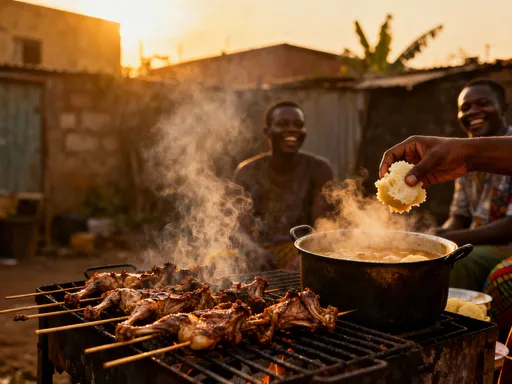
If the meze garden revealed the soul of Turkish dining, the streets of Selçuk showed me its pulse. Each morning, I returned to the town square, where daily life unfolded in a symphony of sizzling griddles and steaming kettles. A man turned skewers of lamb over glowing coals, the fat dripping and sparking with each rotation. Nearby, an elderly woman flipped gözleme—thin flatbreads stuffed with spinach, cheese, or potato—on a convex metal plate called a sac. The sound was hypnotic: a soft slap of dough, the hiss of filling cooking through, the crisp release when folded and served on a paper tray.
Gözleme, I discovered, is more than street food—it’s a tradition passed from mother to daughter, often made at home but sold in public spaces to support families. The woman making them that morning told me, through gestures and a few shared words, that her recipe came from her grandmother in a village near Izmir. Each fold of the dough was deliberate, each sprinkle of cheese measured by instinct. She didn’t use scales or timers. Her hands remembered.
And always, there was çay. Served in tulip-shaped glasses, the amber tea appeared at every stop—after breakfast, between bites of simit, during long conversations at bus stops. It was never ordered; it was simply offered. Shopkeepers poured it for customers, friends shared it on benches, children carried trays to elders. This constant presence of tea spoke to a culture where pauses are sacred. In a world that often glorifies speed, here, time is measured in sips and shared silence.
To walk the streets of Selçuk is to witness a living food map. Grilled corn coated in butter and chili powder is sold near fountains where families gather. Fresh pomegranate juice is pressed on the spot, the seeds crushed in a mechanical press that looks decades old. Bakeries release waves of warm bread every few hours, their doors propped open to let the scent drift into the street. These aren’t tourist performances—they’re daily rhythms. And for the traveler willing to step off the main path, they offer the most authentic taste of Ephesus: not in a museum, but in a paper-wrapped gözleme eaten on a stone wall, watching the world go by.
From Ancient Spice Routes to Modern Markets
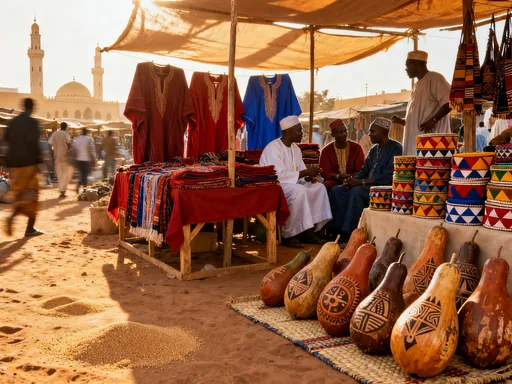
The heart of any Turkish town beats loudest in its market, and Selçuk’s weekly pazar is no exception. Held in a covered hall on the edge of town, it draws farmers, herders, and artisans from surrounding villages. The air is thick with the perfume of ripe figs, wild oregano, and sun-dried tomatoes. Baskets overflow with purple eggplants, green peppers, and bunches of dill so fresh they still glisten. Vendors call out prices in rhythmic cadence, their hands moving quickly to weigh olives or bundle herbs with twine.
As I wandered the aisles, I began to see the deep roots of what I’d been eating. Ephesus, once a major port city on the Aegean, was a crossroads of trade for centuries. Spices, grains, and fruits traveled along ancient routes connecting Asia, Africa, and Europe. Traces of that legacy remain in the ingredients still favored today. Sumac, with its tangy crimson berries, was once a valuable commodity; now it’s sprinkled over salads and meats in nearly every home. Mint, thyme, and wild fennel grow freely in the hills and are used daily in cooking and tea.
I spoke with a vendor who had brought figs from her family’s orchard in the Küçük Menderes Valley. She explained that the soil, enriched by centuries of silt from the river, gives the fruit its unique sweetness. Her children help harvest in late summer, and the surplus is either dried or made into molasses. When I asked how she cooks, she smiled and said, “We use what the land gives us. In spring, we eat greens. In summer, tomatoes and cucumbers. In autumn, figs and grapes. In winter, we remember.”
This seasonal wisdom is not written in cookbooks—it’s lived. The market isn’t just a place to buy food; it’s a calendar, a community board, and a classroom. Here, elders teach grandchildren how to pick the ripest melon, neighbors exchange recipes for lentil soup, and visitors like me learn that authenticity isn’t a trend—it’s a tradition. The spices, herbs, and produce I saw that day weren’t exotic ingredients; they were the foundation of a cuisine that has sustained families for generations. To taste them is to taste time itself.
Home Cooking: A Meal Invited, Not Ordered
One afternoon, while trying to find my way back to the hotel, I stopped to ask for directions. The woman I approached—a retired schoolteacher named Ayşe—didn’t just point the way. She invited me into her home. Her house, a modest two-story building with a flower-filled courtyard, sat on a quiet street lined with citrus trees. I hesitated, but her kindness was disarming. Within minutes, I was sitting at her kitchen table, watching her roll out thin sheets of dough for börek while her cat curled around her ankles.
She moved with quiet precision, layering cheese and herbs between sheets of yufka, then baking them until golden. But the real magic came with the dolma. She showed me how to blanch grape leaves, then carefully stuff them with a mixture of rice, pine nuts, and currants, seasoned with cinnamon and mint. As they simmered in a pot with lemon slices, she shared stories of her childhood in a village without electricity, where meals were cooked over open fires and everyone ate from the same bowl.
When the food was ready, we sat outside under a grape arbor. She served stuffed peppers, yogurt with cucumber and garlic, and a slice of baklava so flaky it dissolved on the tongue. The syrup, she told me, was made from local honey and rosewater. As I ate, I realized this wasn’t just a meal—it was a gift. There was no bill, no expectation, only generosity. I was not a customer. I was a guest.
That evening changed how I think about travel. In a world where experiences are often packaged and priced, Ayşe reminded me that the most meaningful moments are unscripted. Food, in her home, was more than sustenance. It was memory, identity, and love made tangible. I didn’t just taste Turkish cuisine—I felt it. And in that feeling, I understood something deeper: that hospitality is not a service, but a language. It doesn’t need translation. It speaks through a shared plate, a warm smile, a second helping offered without words.
Balancing Tourism and Tradition: Where to Eat Authentically
As Ephesus grows in popularity, the line between authentic experience and tourist performance can blur. Restaurants near the main entrance often display menus in five languages, with photos of dishes that look nothing like what’s served. Portions shrink, prices rise, and the food loses its soul. For travelers seeking real connection, the challenge is knowing where to look—and how to engage respectfully.
The first clue is language. If the menu is only in Turkish, you’re likely in the right place. If families are dining there, especially elders with grandchildren, it’s a strong sign of authenticity. Avoid places where staff aggressively call out to passersby. True local spots don’t need to shout—their food speaks for itself. Look for garden restaurants on the outskirts of Selçuk, where tables are shaded by trees and the air carries the scent of herbs. Village kitchens, often unmarked, serve daily specials based on what’s fresh. Tea houses away from the main tourist path offer çay and simple snacks in a relaxed setting where time slows down.
Respectful engagement goes beyond choosing the right place. Learning a few basic Turkish phrases—“Teşekkür ederim” (thank you), “Lütfen” (please), “Afiyet olsun” (enjoy your meal)—opens doors. Observing local customs matters too. It’s customary to accept tea when offered, even if you don’t drink it all. Tipping is appreciated but not expected in small family-run places. And never rush. Meals are not transactions; they are moments to be savored.
The most authentic experiences often come from being present. Sit at a market stall and watch how locals order. Follow the scent of grilled meat to a backstreet vendor. Smile, point, and trust. The best meals in Ephesus aren’t found in guidebooks—they’re discovered in quiet moments, in shared silences, in the kindness of strangers who offer not just food, but a piece of their world.
Why Ephesus Feeds More Than Your Curiosity
When I first arrived in Ephesus, I carried a guidebook and a list of must-see ruins. I left with a different kind of knowledge—one written not in ink, but in flavor. The ancient stones told me about empires and engineers, but the food told me about people. It revealed how centuries of trade, migration, and tradition have shaped a cuisine that is both rich and humble, complex and comforting.
Tasting Turkish food in Ephesus is not just an act of eating. It’s a form of remembering. Each dish carries the memory of hands that kneaded the dough, picked the herbs, or stirred the pot. It holds the identity of a region that has welcomed travelers for millennia, not with grand gestures, but with open tables. To eat here is to participate in a legacy of hospitality that transcends language and time.
For travelers, this is a powerful reminder: the deepest journeys are not measured in miles, but in moments of connection. Come for the ruins, yes. Walk the marble streets, marvel at the amphitheater, stand in awe of what remains. But stay for the flavors. Let a simit guide your morning, a meze spread slow your afternoon, a home-cooked meal warm your evening. Let the food lead you off the beaten path and into the heart of what Ephesus truly is.
Because Ephesus is not just carved in stone. It’s simmering in pots, served on plates, and shared with warmth. It’s in the steam rising from a cup of çay, the crunch of a fresh herb, the smile of a woman who offers you more food even when you say you’re full. It’s alive. And if you’re willing to taste it, you’ll find it changes everything.